
AI Therapy: The Enterprise Advantage with Corporate AI Mental Health Tools
- James Colley
- Apr 16
- 4 min read

In today’s fast-paced and high-pressure work environments, mental health is no longer a peripheral concern but a core component of workforce performance and safety. Enterprises across industries such as mining, construction, healthcare, and aviation face unique challenges in maintaining employee wellbeing while ensuring productivity, compliance, and risk mitigation. The emergence of corporate AI mental health tools offers a transformative approach to addressing these challenges at scale. By integrating AI-powered therapy solutions, organizations can proactively support their workforce, reduce burnout, and enhance retention—all while maintaining operational excellence.
The Strategic Importance of Corporate AI Mental Health Tools
Mental health directly impacts workforce productivity, safety, and engagement. Traditional mental health programs often struggle with accessibility, stigma, and scalability, especially in industries with shift work, remote locations, or high-stress roles. Corporate AI mental health tools provide a scalable, accessible, and data-driven alternative that aligns with enterprise goals.
These tools leverage artificial intelligence to deliver personalized mental health support 24/7, enabling employees to access help when and where they need it. This immediacy reduces absenteeism and presenteeism by addressing issues before they escalate. Moreover, AI platforms can monitor mental health trends in real time, allowing HR and safety leaders to identify emerging risks and intervene proactively.
Key benefits include:
Increased productivity: Employees with access to timely mental health support demonstrate higher focus and efficiency.
Improved retention: Supportive mental health programs reduce turnover by fostering a culture of care.
Enhanced compliance: Real-time monitoring helps meet workplace safety and psychological risk regulations.
Risk reduction: Early identification of mental health concerns prevents incidents related to stress and fatigue.

How AI Therapy Enhances Workforce Wellbeing and Safety
AI therapy platforms are designed to complement existing employee assistance programs by providing continuous, confidential, and stigma-free support. Unlike traditional therapy, AI-driven solutions use natural language processing and machine learning to understand employee needs and deliver tailored interventions.
For example, an employee in a high-stress role such as emergency response can engage with AI video therapy sessions or voice support anytime, without waiting for scheduled appointments. This immediacy helps manage stress and anxiety before they impact job performance or safety.
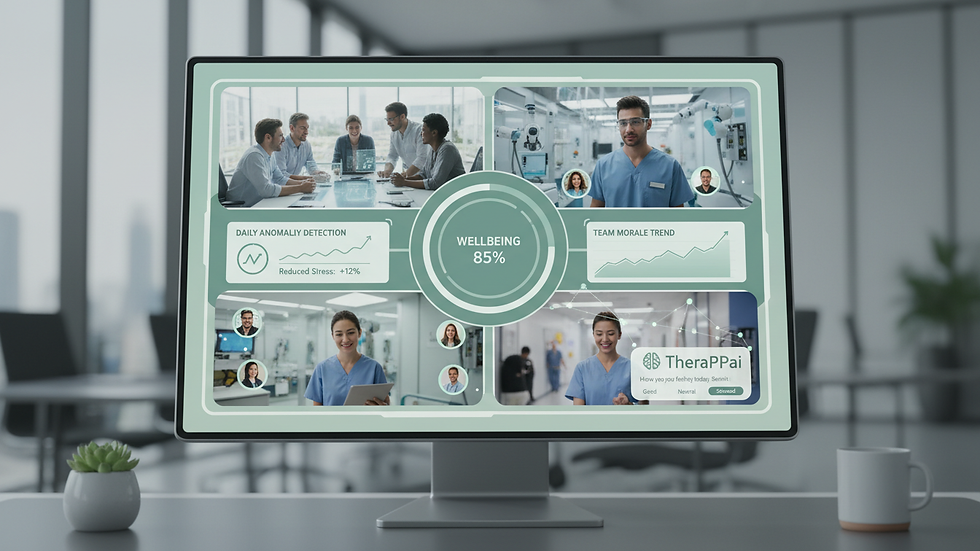
Additionally, AI platforms collect anonymized data to generate insights on workforce wellbeing trends. This data empowers HR leaders and workplace health and safety teams to:
Identify departments or roles with elevated psychological risk
Tailor wellness initiatives based on real-time feedback
Measure the effectiveness of mental health programs quantitatively
By integrating AI therapy into enterprise health strategies, organizations create a proactive culture that prioritizes mental health as a critical factor in operational success.
Implementing AI Therapy Solutions: Practical Steps for Enterprises
Adopting AI therapy tools requires thoughtful planning and alignment with organizational goals. Here are actionable recommendations for successful implementation:
Assess workforce needs: Conduct surveys and focus groups to understand mental health challenges specific to your industry and workforce demographics.
Choose scalable platforms: Select AI therapy solutions that offer 24/7 access, multi-modal support (video, voice, chat), and integration capabilities with existing HR systems.
Ensure data privacy and compliance: Prioritize platforms with robust security measures and compliance with regional regulations such as HIPAA or GDPR.
Promote awareness and destigmatize use: Launch internal campaigns to educate employees on the benefits and confidentiality of AI therapy.
Train leadership and managers: Equip supervisors with tools to recognize mental health signals and encourage utilization of AI resources.
Monitor and evaluate outcomes: Use platform analytics to track engagement, symptom improvement, and impact on absenteeism and retention.
By following these steps, enterprises can embed AI therapy into their workforce wellbeing strategies effectively and sustainably.
Measuring the Impact: Data-Driven Outcomes of AI Therapy in Enterprises
The value of corporate AI mental health tools is best demonstrated through measurable outcomes. Organizations that have integrated AI therapy report significant improvements in key performance indicators:
Reduction in burnout rates: Continuous support helps employees manage stress, leading to fewer burnout cases.
Lower absenteeism: Early intervention reduces time off due to mental health issues.
Improved employee engagement: Access to mental health resources correlates with higher job satisfaction and loyalty.
Decreased psychological risk incidents: Real-time monitoring enables timely interventions, reducing workplace accidents linked to mental fatigue.
For instance, a logistics company implementing AI therapy saw a 30% decrease in absenteeism within six months, alongside improved safety compliance scores. These results underscore the strategic advantage of investing in AI-powered mental health solutions.
Enterprises seeking to leverage these benefits can explore ai therapy for enterprises to access platforms designed specifically for large-scale workforce wellbeing.
Future Outlook: Scaling Mental Health Support with AI Innovation
As AI technology evolves, the potential for enterprise mental health support expands. Future developments may include:
Predictive analytics: Anticipating mental health risks before symptoms appear.
Personalized wellness plans: AI-driven recommendations tailored to individual employee profiles.
Integration with wearable tech: Real-time physiological data enhancing mental health monitoring.
Multilingual and culturally sensitive support: Expanding accessibility for diverse global workforces.
Enterprises that adopt AI therapy early position themselves as leaders in workforce wellbeing, gaining competitive advantage through healthier, safer, and more engaged employees.
Investing in corporate AI mental health tools is not just a response to current challenges but a forward-looking strategy that aligns mental health with business performance and sustainability.
By embracing AI therapy solutions, organizations can transform mental health from a reactive concern into a proactive enterprise advantage. This shift supports not only individual employees but also the broader goals of productivity, retention, compliance, and risk reduction essential to thriving in today’s complex work environments.


Comments