
AI Therapy for Anxiety: How Technology Is Changing Treatment
- James Colley
- Sep 17, 2025
- 5 min read

Anxiety is one of the most common mental health challenges in the world, affecting hundreds of millions of people. Symptoms range from racing thoughts, tight chest, and insomnia to debilitating panic attacks. Traditional therapy has long been effective but is often limited by waitlists, cost, and availability.
That’s where AI therapy for anxiety is changing the game. By delivering structured, evidence-based tools—especially cognitive behavioral therapy (CBT)—through apps and digital platforms, AI can put support into people’s hands instantly. While not a replacement for licensed professionals, AI is proving to be a powerful complement that improves access, consistency, and self-management.
This article explores how AI therapy for anxiety works, the evidence behind CBT, the calming techniques that really help, and how apps like Therappai are innovating with video-based AI therapy, Crisis Buddy, and personalized insights. It builds on our guide to the future of AI therapy.

What is AI Therapy for Anxiety?
AI therapy for anxiety involves using artificial intelligence—chatbots, virtual therapists, and self-help platforms—to deliver structured interventions like CBT, mindfulness, and relaxation techniques.
Typically, these tools provide:
CBT-style guided sessions: identifying triggers, surfacing thoughts, reframing distortions, and planning exposures.
Personalized recommendations: based on your input, mood logs, or anxiety ratings.
Skill coaching: e.g., breathing, grounding, progressive muscle relaxation.
Tracking and insights: progress reports that show what’s working.
As the Therappai 2025 guide notes, AI therapy is best thought of as a daily coach + CBT workbook + progress dashboard, giving you support right when anxiety flares.
Why Anxiety Responds Well to CBT
Cognitive Behavioral Therapy (CBT) is the gold-standard treatment for anxiety. It’s highly structured and focuses on the relationship between thoughts, feelings, and behaviors.
Research shows CBT produces consistent, long-term improvements:
A 2022 meta-analysis confirmed large effect sizes for CBT across anxiety disorders, making it one of the most effective treatments available (PMC).
A JAMA Psychiatry review of 69 trials found CBT reduced anxiety symptoms significantly, with benefits lasting 12 months post-treatment (JAMA Psychiatry).
A 2025 network meta-analysis compared delivery formats: individual CBT (in person) had the strongest outcomes, but remote/AI-supported CBT was more effective than no treatment or waitlists (Nature).
Because CBT is structured and repeatable, AI can guide people through its steps effectively—making it a natural fit for anxiety treatment.
Inside a CBT-Based AI Session
A typical CBT session—replicated by AI apps—follows this flow:
Check-in: “Rate anxiety (0–10). What’s the trigger?”
Thought capture: Identify automatic thoughts.
Distortion detection: Spot catastrophizing, mind-reading, or all-or-nothing thinking.
Evidence review: List facts for and against the thought.
Reframe: Create a balanced, more accurate thought.
Action plan: Design a small behavioral experiment.
Skill practice: Use breathing or grounding to calm down.
Review & log: Note before/after scores.
Homework: Practice again in real life.
AI shines because it’s instant, judgment-free, and available on demand—whether at 3pm before a meeting or 3am during insomnia.
Calming Techniques That Work with AI Therapy
Anxiety spikes often involve physical arousal. AI therapy apps typically integrate calming skills like:
Box breathing (4-4-4-4) – inhale 4, hold 4, exhale 4, hold 4.
Paced breathing (4-6) – long exhale activates the parasympathetic system.
5-4-3-2-1 grounding – identify sensory details to shift focus.
Progressive Muscle Relaxation (PMR) – tense/release muscle groups to reduce tension.
Behavioral activation – take a small, meaningful action instead of avoiding.
Micro-exposure – practice tiny steps toward feared situations.
These are all research-supported: breathing exercises regulate nervous system activity, PMR reduces physical tension, and exposure/activation produce lasting anxiety reduction (JAMA Psychiatry).
Evidence for AI & Chatbot-Based Tools
Recent studies show that AI-driven apps can reduce anxiety:
Youper: In a large user study (n ≈4,500), anxiety symptoms dropped significantly within 2 weeks; improvements were sustained at 4 weeks (PMC).
Therabot: A 2025 randomized trial found an AI therapy chatbot reduced symptoms of anxiety, depression, and eating disorders, while maintaining safety through human oversight (Dartmouth).
General chatbot reviews: Reviews confirm most AI therapy apps use CBT techniques and are perceived as supportive, though evidence quality varies and crisis limitations remain (PMC).
These results reinforce that AI tools are effective supplements for anxiety management, though not substitutes for professional therapy.
Choosing the Best AI Therapy Apps for Anxiety
When evaluating the best AI therapy apps for anxiety, look for:
✅ CBT structure – guided reframes, exposure plans
✅ Skill library – breathing, grounding, relaxation
✅ Progress tracking – see anxiety scores improve
✅ Crisis safeguards – clear escalation resources
✅ Data privacy – encrypted, user-controlled data
✅ Ease of use – two-tap check-ins, minimal friction
Apps like therappai combine these best practices with unique features.

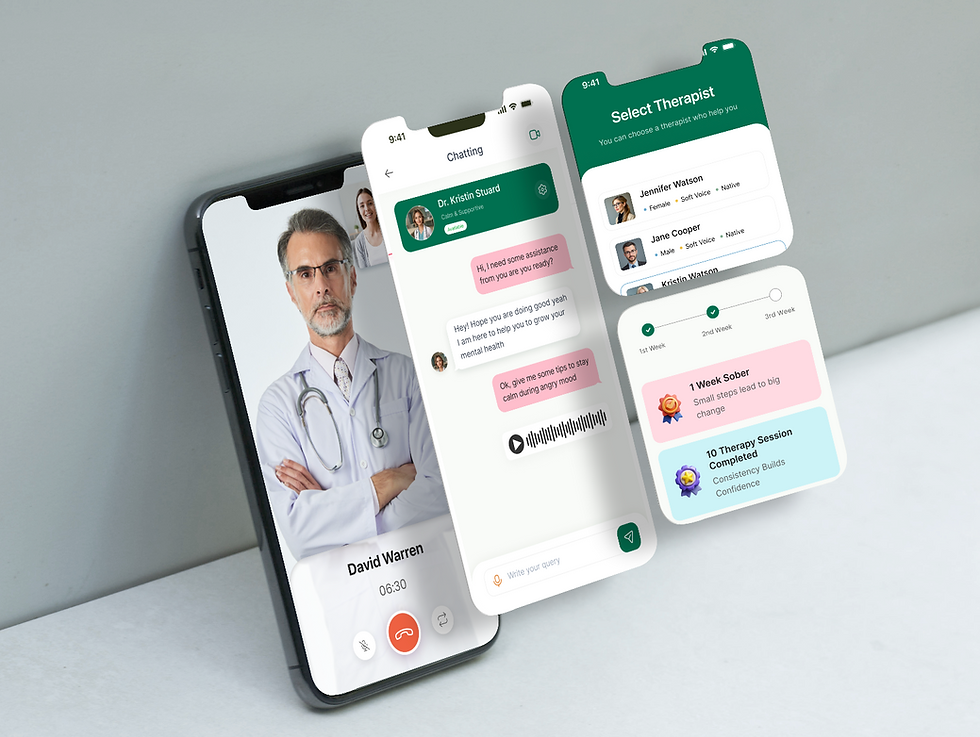
How Therappai Tackles Anxiety Differently
therappai goes beyond standard AI chat by offering:
AI Video Therapy Sessions
Human-like video presence builds trust.
CBT flows integrated directly into conversation.
Crisis Buddy
Fast access to grounding, breathing, and safety plans.
Designed for “pre-crisis” spikes of anxiety.
Insights & Milestones
Pattern analysis: “Caffeine after 5pm = higher anxiety.”
Celebrates streaks and improvements.
Practice Plans & Accountability
Daily micro-sessions (3–7 minutes).
Weekly progress summaries.
Privacy & Control
You own your data; delete/export anytime.
These align with clinical research showing that structured CBT, calming techniques, and progress tracking lead to meaningful improvements.
A 7-Day AI Anxiety Program (Sample)
Day 1: Baseline check-in + box breathing
Day 2: Thought record + 5-4-3-2-1 grounding
Day 3: Behavioral experiment (small risk)
Day 4: PMR relaxation + sleep hygiene tweak
Day 5: Meaningful action (behavioral activation)
Day 6: Micro-exposure (camera on briefly)
Day 7: Review logs, set toolkit for next week
therappai guides you through these steps seamlessly.
When AI Isn’t Enough
Important caveats:
AI apps are not for emergencies. If suicidal or in crisis, call local emergency services.
Severe anxiety disorders may need professional CBT or medication.
Engagement often drops off over time, so accountability (friends, therapists) helps sustain use.
As experts emphasize, AI should be seen as augmenting—not replacing—human care (APA).
The Future of AI Therapy for Anxiety
Trends to watch:
Video-first AI therapists (like Therappai) improving rapport.
Personalized CBT protocols using biosignals and data.
Outcome dashboards linking habits to progress.
The future is a hybrid model: AI for daily coaching, humans for complex care.
Final Thoughts
AI therapy for anxiety makes evidence-based support scalable, instant, and practical. CBT-grounded AI apps guide users through reframes, calming techniques, and action plans while tracking progress.
If you’re exploring the best AI therapy apps for anxiety, look for CBT structure, skills, progress tracking, and privacy. Therappai delivers all of these—plus unique video sessions and a Crisis Buddy.
For a deeper dive into how AI is transforming mental health, see our complete guide to the future of AI therapy (2025).
References
Bhattacharya S, et al. Efficacy of CBT for Anxiety. PMC
Van Dis EA, et al. Long-term Outcomes of CBT for Anxiety Disorders. JAMA Psychiatry
Liu S, et al. CBT Delivery Formats for GAD (2025 Network Meta-analysis). Nature
Pegg S, et al. CBT for Youth Anxiety. Springer
Mehta A, et al. Acceptability & Effectiveness of AI-based Apps (Youper Study). PMC
Haque MDR, et al. Overview of Chatbot Mental Health Apps. PMC
Dartmouth College. Therabot Trial Results. Dartmouth News
APA. AI Chatbots and Therapy: Benefits and Limitations. APA Services


Comments